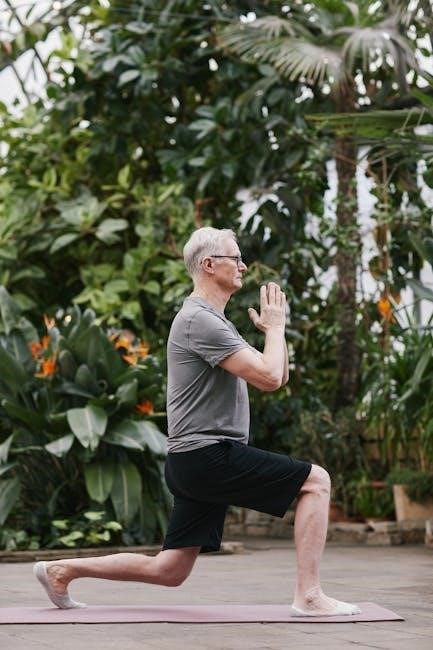
Full circuits maximize efficiency, offering a complete workout utilizing bodyweight or minimal equipment, easily downloadable as a full body circuit workout PDF.
What is a Full Body Circuit?
A full body circuit is a training method where you cycle through a series of exercises, targeting all major muscle groups – legs, back, chest, shoulders, and arms – with minimal rest between them. Think of it as a streamlined, efficient workout, often packaged conveniently as a full body circuit workout PDF for easy access.
Unlike isolating specific muscles, a circuit keeps your heart rate elevated, combining strength and cardiovascular benefits. Each exercise is performed for a set duration or repetitions, followed immediately by the next, creating a continuous flow. This format is incredibly versatile; a full circuit can be built with just bodyweight, making it ideal for home workouts or travel, and easily compiled into a downloadable PDF guide. It’s about maximizing your time and achieving a full-body challenge!
Benefits of Circuit Training

Circuit training, especially when accessed through a convenient full body circuit workout PDF, offers a wealth of advantages. It’s incredibly time-efficient, delivering a full-body workout in a shorter timeframe compared to traditional methods. Because circuits keep your heart rate up, you simultaneously improve cardiovascular fitness and muscular endurance.
Furthermore, the minimal equipment requirement – often just your bodyweight – makes it accessible anywhere, anytime. This flexibility is a key benefit highlighted in many PDF guides. Circuit training also boosts metabolism, leading to increased calorie burn even after the workout is complete. It’s adaptable to all fitness levels, with modifications readily available, often detailed within a full body circuit workout PDF, ensuring a challenging yet safe experience for everyone.
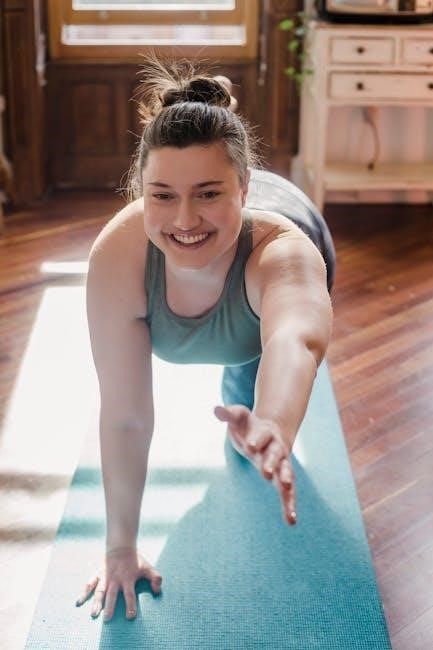
Designing Your Full Body Circuit Workout
Crafting a full body circuit, often found as a downloadable PDF, requires careful exercise selection, structured sets, reps, and appropriate rest periods for optimal results.
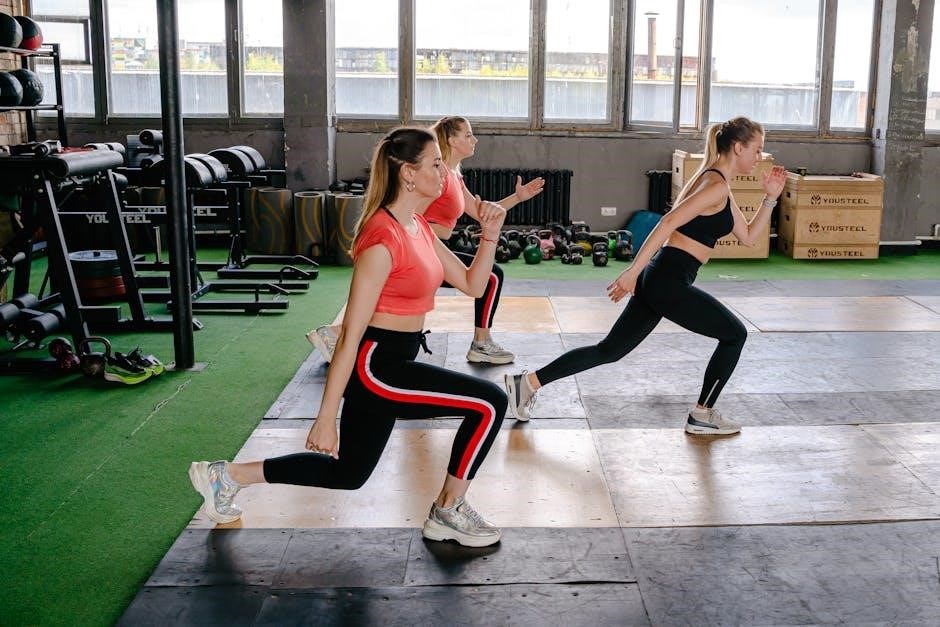
Warm-up Exercises (5-10 minutes)
A dynamic warm-up is crucial before any full body circuit, especially one you’ll be following from a PDF guide. Begin with 5-10 minutes of light cardio, like jogging in place or jumping jacks, to elevate your heart rate and increase blood flow to your muscles.
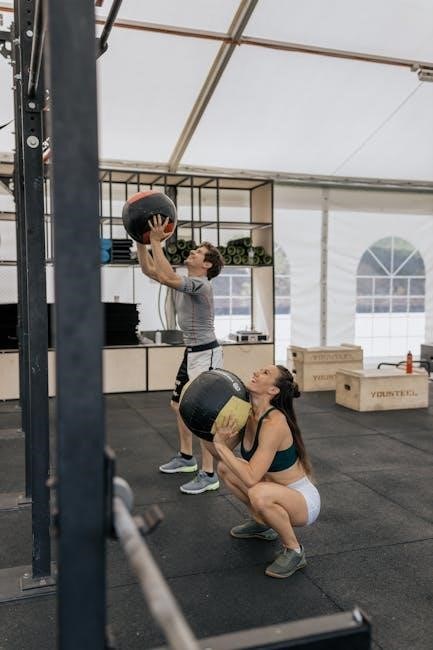
Follow this with dynamic stretches, focusing on movements that mimic those in your circuit. Include arm circles, leg swings, torso twists, and high knees. These prepare your joints and muscles for the demands of the workout.
A proper warm-up minimizes the risk of injury and maximizes performance. Don’t skip this step, even if you’re eager to jump into the exercises outlined in your full body circuit PDF! Prioritize mobility and activation before intensity.
Choosing Exercises for a Balanced Workout
When designing a full body circuit, particularly for a PDF workout plan, prioritize exercises that target all major muscle groups. A balanced routine prevents imbalances and promotes overall fitness. Consider incorporating both compound and isolation movements for optimal results.
A well-rounded circuit should include exercises for legs (squats, lunges), chest (push-ups), back (rows), shoulders (overhead press), and core (planks, crunches). The exercises selected for your PDF should be scalable to different fitness levels.
Remember, a full body approach ensures no muscle group is neglected. Carefully select exercises that complement each other and contribute to a comprehensive workout experience, easily followed from your downloadable PDF.
Compound Exercises
Compound exercises are foundational for a full body circuit, especially when creating a PDF workout. These movements engage multiple muscle groups simultaneously, maximizing efficiency and calorie burn. Think squats, lunges, push-ups, and rows – all excellent choices for inclusion.
For your PDF, clearly illustrate proper form for each compound exercise. These are more complex, so detailed instructions are crucial. They build strength and endurance effectively, forming the core of a robust circuit. Prioritize these for a truly full-body effect.
Including variations within your PDF allows for scalability. For example, offer regressions for push-ups (knee push-ups) or progressions for squats (jump squats). This ensures accessibility for all fitness levels.
Isolation Exercises
While compound movements form the core, isolation exercises refine a full body circuit PDF. These target specific muscle groups, addressing imbalances and enhancing overall definition. Examples include bicep curls, tricep extensions, calf raises, and abdominal crunches.

Within your PDF, strategically place isolation exercises after compound movements. This pre-fatigues the targeted muscle, increasing effectiveness. Keep rep ranges moderate to high, focusing on controlled movements. Visual aids demonstrating correct form are essential, as improper technique can limit results.
Don’t overemphasize isolation; they supplement, not replace, compound work. A balanced PDF incorporates both for a comprehensive and full workout experience, catering to diverse fitness goals.
Structuring the Circuit: Sets, Reps, and Rest
A well-structured circuit within your full body workout PDF is crucial for optimal results. Typically, 2-4 rounds are recommended, depending on fitness level. For each exercise, aim for 10-15 repetitions, focusing on maintaining proper form throughout. Adjust reps based on exercise difficulty and individual capabilities.
Rest periods are equally important. Between exercises, keep rest brief – 15-30 seconds – to maintain an elevated heart rate. After completing one full circuit, allow 60-90 seconds of recovery before starting the next. Clearly outline these parameters within your PDF.
Consider including variations for different levels, offering options for increased or decreased rest times. This ensures the PDF caters to a wider audience and promotes a full range of fitness progression.

Example Full Body Circuit Workout (PDF Focus)
Full body circuit workout PDFs often include beginner, intermediate, and advanced routines, offering scalable exercises for diverse fitness levels and progressive training.
Workout 1: Beginner Level
This beginner-level full body circuit, ideal for a PDF workout guide, focuses on foundational movements. Perform each exercise for 30 seconds, followed by 15 seconds of rest. Complete the entire circuit three times, with a 60-second rest between each round. Exercises include bodyweight squats, push-ups (modified on knees if needed), walking lunges, plank (hold for 30 seconds), and dumbbell rows (using light weights or resistance bands).
A downloadable PDF version should clearly illustrate each exercise with images or QR codes linking to demonstration videos. Emphasis should be placed on proper form over speed. This circuit is designed to build a base level of strength and endurance, preparing individuals for more challenging workouts. Remember to consult a healthcare professional before starting any new exercise program. This workout is easily accessible and requires minimal equipment, making it perfect for home use.
Workout 2: Intermediate Level
This intermediate full body circuit, perfect for inclusion in a PDF workout plan, increases intensity and complexity. Perform each exercise for 45 seconds, with 15 seconds rest. Complete four rounds, resting 60-90 seconds between each. Exercises include jump squats, incline push-ups, reverse lunges, plank with shoulder taps, dumbbell rows, and burpees (modified without push-up if needed).
A well-designed PDF should feature clear exercise demonstrations – images or QR codes are essential. Focus on maintaining good form throughout. This circuit builds upon the beginner level, enhancing strength, endurance, and cardiovascular fitness. Consider adding variations to exercises for increased challenge. Remember proper warm-up and cool-down routines are crucial. This workout is suitable for those with some exercise experience and a moderate fitness level.
Workout 3: Advanced Level
This advanced full body circuit, ideal for a comprehensive PDF workout guide, demands significant strength and endurance. Execute each exercise for 60 seconds, with minimal 10-second rest. Complete five rounds, allowing 90-120 seconds recovery between rounds. Exercises encompass pistol squats, decline push-ups, walking lunges with weights, plyometric push-ups, renegade rows, and full burpees.
A detailed PDF should include precise form cues and potential modifications. Prioritize controlled movements to prevent injury. This circuit targets all major muscle groups, maximizing calorie burn and improving athletic performance. Advanced users can incorporate weighted vests or resistance bands. Remember a thorough warm-up and cool-down are non-negotiable. This level is best suited for experienced fitness enthusiasts.

Important Considerations for PDF Creation
A full body circuit PDF requires clear formatting for both digital viewing and printing, alongside easily understood exercise demonstrations via images or QR codes.
Formatting for Print & Digital Use
When crafting a full body circuit workout PDF, prioritize versatility for both print and digital consumption. Ensure the document is appropriately sized for standard paper formats (8.5×11 inches) while remaining easily readable on various screen sizes. Utilize clear, concise language and a logical layout to enhance user experience.
Font choices are crucial; select readable fonts suitable for both print and digital displays. Employ sufficient white space to prevent a cluttered appearance; Consider using bookmarks or a table of contents for easy navigation within the PDF.
Image resolution should be high enough for print quality but optimized for web viewing to minimize file size. Interactive elements, like clickable links to exercise demonstration videos (via QR codes), can enrich the digital experience. Always test the PDF on different devices and printers to guarantee consistent formatting.
Including Exercise Demonstrations (Images/QR Codes)
A full body circuit workout PDF benefits immensely from visual aids. High-quality images demonstrating proper form for each exercise are essential, ensuring users understand correct technique and minimize injury risk. Supplementing images with short video demonstrations accessed via QR codes elevates the learning experience.
QR codes link directly to online videos, providing dynamic instruction. Ensure videos are concise and clearly illustrate the exercise. Strategically place images and QR codes near the corresponding exercise descriptions within the PDF layout.
Consider including multiple angles in images or videos to offer a comprehensive view. Prioritize clarity and simplicity in demonstrations. A well-illustrated PDF empowers users to perform the circuit safely and effectively, maximizing their workout benefits.
Safety and Modifications
Full body circuit workout PDF guides must prioritize safety; offer modifications for varying fitness levels, emphasizing proper form to prevent injuries during exercise.
Proper Form and Technique
Full body circuit workout PDFs absolutely must emphasize proper form and technique above all else. Incorrect execution dramatically increases injury risk, negating any potential benefits. Each exercise within the PDF should include clear, concise instructions detailing the correct body positioning, movement patterns, and breathing techniques.
Visual aids, like images or even QR codes linking to demonstration videos, are invaluable. A full explanation should cover common mistakes to avoid, ensuring users understand how to perform each exercise safely and effectively. Prioritize controlled movements over speed; quality trumps quantity. Remind users to listen to their bodies and stop if they experience any pain. A well-designed PDF will empower users to perform the circuit with confidence and minimize the chance of injury, leading to sustainable fitness gains.
Modifications for Different Fitness Levels
A comprehensive full body circuit workout PDF should cater to a diverse range of fitness levels. Offering modifications is crucial for inclusivity and preventing discouragement. Include regressions – simpler versions of exercises – for beginners or those with limitations. For example, knee push-ups instead of standard push-ups, or wall squats instead of full squats.

Conversely, provide progressions – more challenging variations – for advanced users. This could involve adding weight, increasing the range of motion, or incorporating plyometric elements. Clearly label each modification within the PDF, indicating the appropriate fitness level. A full explanation of how to adjust the intensity ensures everyone can participate safely and effectively, maximizing their results and fostering a positive workout experience.
Resources for Finding More Workouts
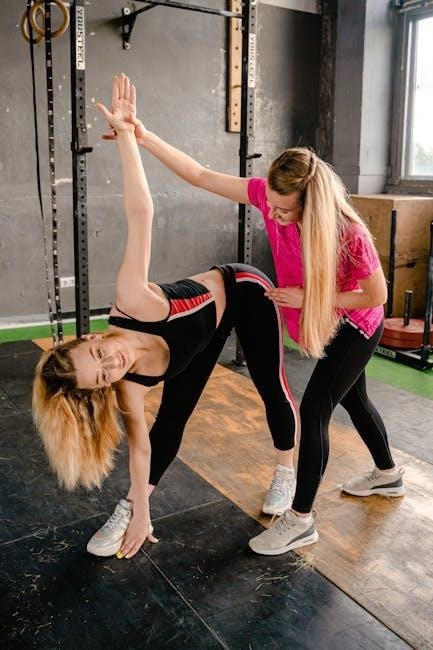
Beyond creating your own full body circuit workout PDF, numerous online resources offer pre-designed routines and inspiration. Websites specializing in fitness, like NerdFitness and Bodybuilding.com, frequently publish circuit training plans suitable for various levels. YouTube channels, such as FitnessBlender and POPSUGAR Fitness, provide video demonstrations of exercises and complete workouts, easily adaptable for a PDF format.
Pinterest is a visual goldmine for workout ideas, often linking to detailed PDF guides. Consider exploring fitness apps like Nike Training Club or FitOn, which offer structured programs and the ability to customize circuits. Remember to critically evaluate the source and ensure the workouts align with your fitness goals and safety guidelines before incorporating them into your full body routine.